
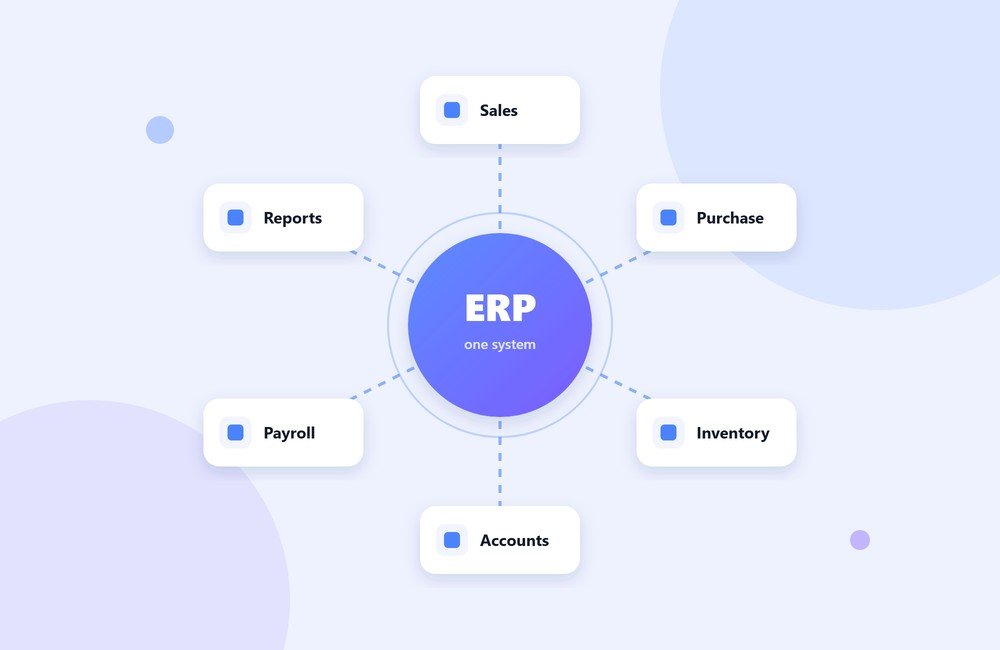
ERP stands for enterprise resource planning. The name sounds like it belongs only to large corporations, but the idea is simple: one system where the core parts of your business share the same data.
What an ERP system does
Without ERP, a typical B2B business runs on separate tools. Orders live in one place, stock in a spreadsheet, invoices in accounting software, and purchase orders in email. Every time information moves between them, someone retypes it.
An ERP connects those pieces. When a sales order is confirmed, stock is reserved, an invoice can be raised from the same record, and the accounts update without anyone copying numbers across. Common modules include:
- Sales and billing: quotes, orders, invoices and payments received.
- Inventory: stock levels, warehouses, reorder points.
- Purchase: suppliers, purchase orders and goods received.
- Accounts: ledgers, receivables, payables and tax reports.
- Payroll and HR: salaries, attendance and leave.
Signs you have outgrown spreadsheets
- The same data is entered in two or three places, and the copies do not always match.
- You find out about stock shortages when a customer order cannot be fulfilled.
- Month-end takes days because figures have to be pulled together by hand.
- Only one person really understands how the spreadsheets fit together.
- Following up unpaid invoices depends on someone remembering.
- Preparing GST returns means exporting and reconciling data from several sources.
None of these on its own means you need ERP tomorrow. When several of them are true, the time spent working around your tools is usually costing more than a proper system would.
What to look for
- Fit. The system should match how your business already works, rather than forcing you to reorganise around it.
- Ease of use. If staff need weeks of training, adoption will be slow and patchy.
- Sensible pricing. Avoid paying for large modules you will never use.
- Room to grow. Adding a module later should not mean switching systems.
- Local requirements. For Indian businesses, GST invoicing and reporting should be built in, not bolted on.
Where Sares ERP fits
We are building Sares ERP around exactly these points: an ERP for B2B businesses of any size, designed to be easy to learn, with pricing based on the modules you actually use. It is in final development and not yet on sale. If you would like to hear when it launches, get in touch.